The full mouth dental implants cost in the United States usually ranges from about $40,000 to $100,000 or more when both arches are treated. One full arch often costs about $20,000 to $50,000, but the final fee depends on implant number and type, restoration material, extractions, bone treatment, sedation, and whether the quote includes temporary and final teeth.
These are broad planning ranges, not a personal quote. A full exam is necessary because two patients who need a similar result may require very different surgical and restorative care. Learn more about the cost of dental implants.
If you are weighing options for replacing most or all teeth, dental implants can help you regain chewing function, esthetics, and long-term stability compared with conventional dentures. South Florida Sedation Dentistry in West Palm Beach provides experienced implant care aimed at comfortable treatment and predictable restorative outcomes.
Full mouth implant treatment replaces most or all teeth in the upper jaw, lower jaw, or both. Implants are small posts placed in the jawbone, while a bridge or denture attached to them provides the visible teeth and biting surfaces.
If you want a basic overview, see What are dental implants? Full-mouth treatment is often considered when teeth are missing, loose, repeatedly infected, severely worn, or no longer predictably restorable.
Common problems include difficulty chewing, painful teeth, denture movement, speech changes, and avoiding certain foods. A full-arch restoration does not require one implant per tooth.
Many fixed bridges are supported by four to six implants per arch. The exact number depends on anatomy, bite forces, bone quality, and the restoration design.
The phrase “full mouth implants” can describe several treatments with very different costs. These general U.S. estimates are for both arches and may not include every preparatory procedure.
Treatment Type |
General Two-Arch Estimate |
How The Teeth Are Retained |
|---|---|---|
Implant-retained removable dentures |
$15,000 to $40,000 |
Patient removes them for cleaning |
Fixed full-arch implant bridges |
$40,000 to $100,000+ |
Dentist removes them when needed |
Individual implant crowns and bridges |
$60,000 to $120,000+ |
Multiple separate restorations |
An implant-supported dentures option usually costs less because it may use fewer implants and a less complex prosthesis. It can be more stable than a conventional denture, but it still comes out for cleaning.
A fixed full-arch bridge stays in place during daily use and is cleaned underneath with specialized tools. Replacing teeth with multiple individual implant crowns and smaller bridges can feel different and change cleaning patterns, but it usually requires more implants, more bone, and a higher budget.
The implant posts are only part of the total fee. Cost may also include imaging, surgery, prosthetic components, temporary teeth, the final restoration, follow-up visits, and healing management.
Major cost factors include:
Many of these items fall under oral surgery. Extractions, grafting, and related procedures can significantly change both cost and timing.
Bone loss does not automatically rule out implants, but it can change the plan. If you are concerned about candidacy, see when it's too late to get implants.
Some patients need grafting, while others may qualify for angled or strategically positioned implants that use available bone. Material choice also affects price and maintenance.
Zirconia is strong and stain resistant. Metal-reinforced acrylic or composite designs may be easier to repair, but they can wear down or fracture over time.
Evaluation usually starts with symptoms, health history, medications, nicotine use, past dental treatment, and goals. The dentist also checks the gums, remaining teeth, jaw movement, bite, smile, speech, and available space for the restoration.
Panoramic X-rays and often a cone-beam CT scan show bone volume, nerves, sinuses, and possible implant positions in three dimensions. Digital scans, photos, and bite records help determine whether the planned teeth can be supported safely and look proportionate.
Jaw position and bite forces matter because they affect implant loading and long-term wear. Airway-related symptoms such as loud snoring, witnessed pauses in breathing, morning headaches, or severe daytime sleepiness may still deserve medical evaluation, but implants themselves do not treat an obstructed airway.
Uncontrolled diabetes, active gum disease, heavy nicotine exposure, teeth grinding, and some medical therapies can increase healing or implant risks. These factors do not always prevent treatment, but they should be addressed before surgery.
A useful written estimate separates surgical care from restorative care and clearly states what is included. Ask whether the total covers extractions, grafting, sedation, temporary teeth, final teeth, imaging, follow-up visits, and treatment of complications.
Also confirm who will perform each stage and whether the final restoration is removable or fixed. Ask how many implants are planned, what happens if one does not integrate, and when the final teeth are expected.
Insurance may help with extractions, imaging, anesthesia, or part of the prosthesis, but many plans limit or exclude implant coverage. Annual maximums are often far below the total cost, so request a pre-treatment estimate and review financing terms separately.
A lower starting quote is not always a lower total cost. Compare the full treatment scope, restoration material, maintenance needs, and clinician qualifications rather than price alone.
Treatment may begin with removal of failing teeth and implant placement in the same visit. Some patients can receive temporary teeth that day, and certain same-day systems such as TeethXpress provide a fixed temporary restoration immediately after surgery.
The implants still need time to integrate with the jawbone. Final teeth are usually made after healing and tissue changes have stabilized.
Stage |
What May Happen |
Typical Expectation |
|---|---|---|
Planning |
Exam, imaging, scans, health review |
One or more visits |
Surgery |
Extractions, implants, possible grafting |
Temporary teeth may be provided |
Integration |
Bone heals around implants |
Often several months |
Final restoration |
Fit, bite, appearance, and speech refined |
Delivered after adequate healing |
Maintenance |
Professional checks and cleaning |
Ongoing, commonly every 3 to 6 months |
During integration, chewing may need to stay limited to softer foods so the implants are not overloaded. The treating team should give individualized instructions based on implant stability and the temporary restoration.
The full process often takes several months. It can take longer when grafting or staged surgery is needed.
Immediate loading can shorten the time without fixed teeth, but it is not right for every jaw or every clinical situation.
Implants can function for many years, but no implant or restoration is guaranteed for life. For more detail, see how long dental implants last.
Published long-term outcomes show that results depend on healthy bone and gums, effective cleaning, a stable bite, regular professional care, and control of risks such as nicotine use or poorly managed diabetes. Long-term cost should include maintenance, not just the initial procedure.
Daily cleaning is required around and under full-arch bridges because plaque can inflame the tissues around implants. A dentist or hygienist may recommend floss threaders, small interdental brushes, or a water flosser based on the restoration design.
The prosthetic teeth and attachment components may wear, chip, loosen, or need replacement even when the implants remain healthy. Before treatment, ask about likely maintenance expenses, professional cleaning fees, repair policies, and the expected service life of the chosen material.
Prompt evaluation can keep a small mechanical or tissue problem from becoming a larger one. Regular exams also help monitor the bite, bone levels, hygiene access, and condition of the restoration.
Contact the treating dentist promptly for worsening pain or swelling, persistent bleeding, pus, a bad taste, fever, exposed components, a loose bridge, or a change in the bite. New implant movement is not normal and should be checked without delay.
Seek emergency medical care for trouble breathing or swallowing, rapidly spreading facial or neck swelling, uncontrolled bleeding, confusion, or other severe symptoms. Persistent numbness, severe pain, or symptoms that are unclear or worsening also need timely professional assessment.
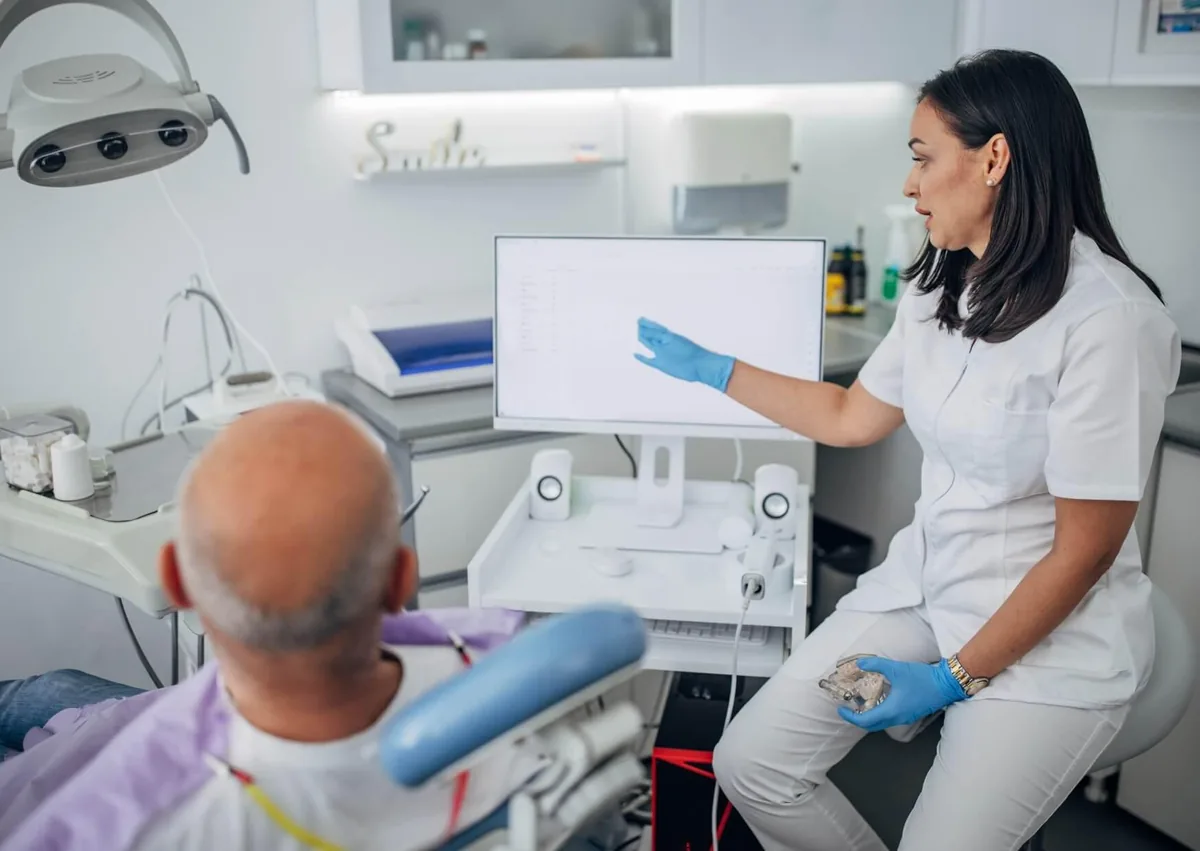
A thorough consultation should leave you with a diagnosis, a staged treatment plan, an itemized estimate, and reasonable alternatives. That makes it easier to weigh cost against surgical complexity, restoration design, maintenance needs, and expected function.
A focused consultation can clarify your treatment scope, cost, and whether a fixed or removable solution is right for you. Call South Florida Sedation Dentistry for dental implants in West Palm Beach and nearby Palm Springs or Royal Palm Beach at (561) 967-2001 to schedule a visit or book online.
Coverage varies widely. Some plans may pay toward exams, imaging, extractions, or the restoration while excluding the implants themselves or applying a low annual maximum. Medical insurance may occasionally contribute when reconstruction follows trauma, tumor surgery, or a qualifying medical condition.
Often, yes. A full-arch bridge can replace many teeth with fewer implants, which reduces the number of surgical sites and individual restorations. Bone anatomy, cleaning ability, bite forces, esthetic goals, and repair preferences should guide the design.
Implants and temporary teeth can sometimes be placed on the same day. The implants still need months to integrate with the jawbone, and final teeth are usually made after healing and tissue changes stabilize.
Many fixed designs use four to six implants per arch, but there is no universal number. Bone volume, implant position, jaw size, bite forces, and restoration type determine what is appropriate.
No. Financing divides the cost into payments and may involve interest, deferred-interest terms, fees, or a credit check, while insurance pays only according to plan benefits. Confirm whether deposits or financing charges are refundable if a planned procedure cannot proceed.
Have your friend, family member, or co-worker scan the code below or visit southfloridasedationdentistry.com on their phone to load our site. Most modern cell phones can scan QR codes using the phone’s camera.